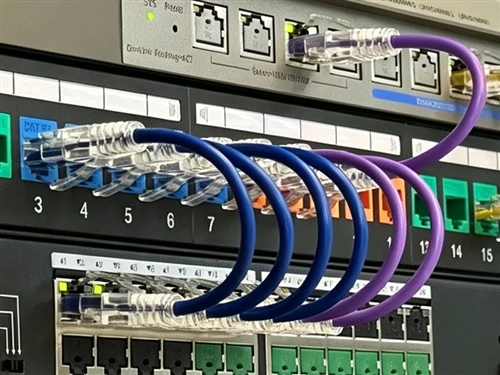
High-temperature resistant flexible cables are special cables designed for complex environments. Their core function is to stably transmit power or signals under conditions of high temperature, mechanical stress, or electromagnetic interference.
The cable's high-temperature resistance primarily stems from the choice of insulation and sheath materials. Common silicone rubber or Teflon (polytetrafluoroethylene) materials can withstand temperatures from 150°C to 250°C, far exceeding the 80°C limit of ordinary PVC materials.
The sheath is made of PUR (polyurethane), which combines abrasion resistance, tear resistance, and oil resistance, making it suitable for scenarios involving frequent bending or friction. The conductor structure uses multi-strand fine copper wires twisted together, ensuring conductivity while enhancing overall flexibility. The minimum bending radius can reach 6 times the wire diameter (6D), facilitating installation in confined spaces.