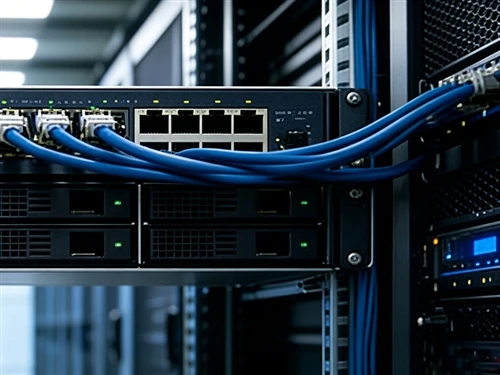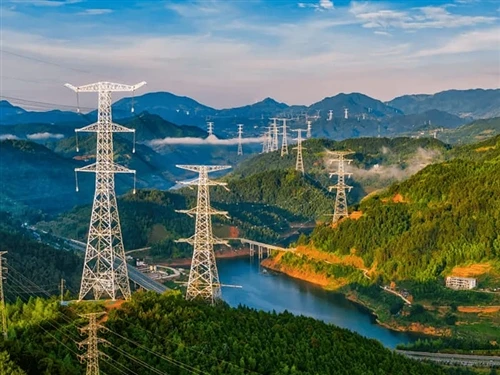
In underground tunnels of cities, in new energy power stations, and on underwater routes, there is a kind of cable that silently carries huge amounts of electrical energy. It is the high-voltage cable. If we compare low-voltage wires to the "capillaries" that run through thousands of households, then the high-voltage cable is the main trunk artery that transports massive amounts of electricity in the power grid, supporting the energy supply of the entire modern society.
In terms of definition, high-voltage cables generally refer to insulated power cables with a rated voltage of 10kV or above, used for electricity transmission and distribution. In the industry, they are further classified: 10kV and 35kV are often classified as medium-high voltage, while 110kV, 220kV belong to high voltage, and 500kV and above are called ultra-high and extra-high voltage cables. The biggest difference between high-voltage cables and the overhead high-voltage lines we usually see in the sky is not just the higher voltage; the entire insulation and shielding structure is completely different, and the requirements for safety and craftsmanship are much stricter.
Many people confuse high-voltage cables with overhead high-voltage lines. Overhead lines are bare conductors that rely on air insulation; while high-voltage cables are fully enclosed insulated structures that can be buried underground, run through pipes, or be laid underwater, unaffected by wind, snow, trees, etc., and are widely used in densely populated cities, scenic areas, and offshore wind power projects, being much neater and safer.
Layers of defense: The internal structure of high-voltage cables
High-voltage cables seem to be just a thick cable, but internally, there is a sophisticated multi-layer protection system. Taking the most common cross-linked polyethylene (XLPE) high-voltage cable as an example, from the inside out, it consists of:
- Conductor:Mostly copper or aluminum, which is the channel for current. Copper has good conductivity and stability; aluminum is lighter and has a lower cost, and is often used for long-distance power transmission.
- Inner semiconductive shielding layer: This is a unique key structure of high-voltage cables, used to smooth out the roughness of the conductor surface, avoid concentrated electric fields, and prevent local discharge and insulation breakdown.
- Main insulation layer: The core of the cable, usually cross-linked polyethylene, isolates high-voltage electricity and locks the electric energy inside the conductor, and the insulation thickness will increase as the voltage level rises.
- Outer semiconductive shielding layer: Combined with the metal shielding layer, it evenly insulates the external electric field and inhibits the aging of electric tree branches.
- Metal shielding layer (copper tape/copper wire shielding): Used for grounding, during normal operation, the induced voltage is released, and during faults, it carries the short-circuit current, protecting the insulation.
- Armor layer: Steel tape or steel wire, resisting compression, tension, insect bites, stone scratches, buried cables usually have armor.
- Outer sheath: The outermost plastic sheath, waterproof, corrosion-resistant, and isolating the acid and alkali in the soil and moisture.
Low-voltage wires do not have two layers of semiconductive shielding, and the insulation layer is also thin. That's why low-voltage wires cannot be directly used as high-voltage cables, and using them forcefully can easily cause breakdown, fire, and explosion, just like the burning of the hybrid circuit board you saw before. Once the insulation of the high-voltage circuit fails, the consequences can be very serious.
Classification and application scenarios of high-voltage cables
According to the insulation material, the current mainstream is cross-linked polyethylene insulated cables, with mature technology, lightweight, and easy to lay. They are used in urban power grids, factories, photovoltaic and wind power, and most of them are used in urban power grids, factories, and photovoltaic and wind power; there are also traditional oil-filled cables, mostly used for ultra-high voltage transmission at sea, and their manufacturing and maintenance are more complex.
Its presence is found in every link of the energy chain:
- Urban power grids: Underground pipe galleries and direct burial in roads, transmitting the high-voltage electricity from substations to distribution rooms in various areas, replacing the numerous overhead lines in the city;
- New energy bases: Wind power generation fields, photovoltaic power stations, raising the electricity generated by generators and sending it to the main grid; the underwater high-voltage cables for offshore wind power are the "life line" of marine energy;
- Large industries and rail transit: Chemical plants, mines, data centers, subways, providing stable power supply to high-power equipment;
- Special scenarios: In addition, hybrid vehicles and new energy vehicles also have dedicated high-voltage cables inside, which are the high-voltage lines connecting the battery pack and the motor of the new energy vehicle. They are special high-voltage cables for vehicles and have different standards from those of the power grid, but the principles are the same.
Characteristics and safety points of high-voltage cables
The greatest advantage of high-voltage cables: Low transmission loss. According to electrical principles, when delivering the same power, the higher the voltage, the smaller the current, and the less heat generation and loss in the line, making them suitable for long-distance power transmission.
However, its risks are also much higher than those of ordinary wires: If the insulation of the high-voltage cable ages, gets waterlogged, is damaged by external force, or the connection is loose, it will cause local discharge, short circuits, and in severe cases, fire, explosion, and extremely high risk of electric shock.
Therefore, the construction, connection making, and testing of high-voltage cables must be carried out by certified professionals. Cable connections are high-risk locations for faults, just like the plug terminals of circuit boards. If the compression is not solid or the seal is damaged by water, over time, it will heat up and corrode. During daily construction, it is strictly prohibited to randomly dig or cut underground high-voltage cables.