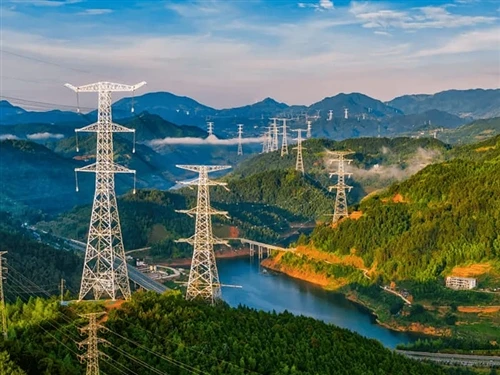
XLPE (cross-linked polyethylene) cables have become the mainstream in power engineering, widely used in power grids, industry, construction, and new energy sectors, fully replacing traditional PVC and oil-impregnated paper-insulated cables.
XLPE cables use cross-linked polyethylene as the insulation layer. Through a cross-linking process that restructures molecular bonds, they overcome the shortcomings of conventional plastic cables-poor heat resistance and susceptibility to aging. With a continuous operating temperature up to 90°C and short-term tolerance to temperatures as high as 250°C during faults, these cables offer excellent insulation performance and low transmission losses, making them ideal for diverse and demanding electrical applications.
The cable features a multi-layer composite structure, consisting from innermost to outermost layers of conductor, insulation, shielding, filler, armor, and outer sheath. This layered design provides effective protection against leakage, mechanical damage, water ingress, and corrosion, enabling reliable performance across various installation environments. Depending on manufacturing methods, XLPE cables can be categorized into hot-water cross-linked, silane cross-linked, irradiation cross-linked, and dry cross-linked types, each suited to specific applications such as low-voltage residential, industrial, high-voltage power grids, and specialized new-energy scenarios.
These cables offer high current-carrying capacity, easy installation, and low maintenance costs, with a service life exceeding 30 years. Commonly used models include YJV (copper conductor) and YJLV (aluminum conductor), both offering cost-effective solutions, as well as armored variants like YJV22 and YJV32 designed for direct burial or vertical shafts, covering all voltage levels required for power transmission.