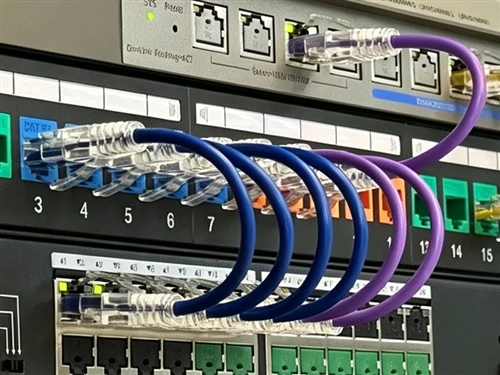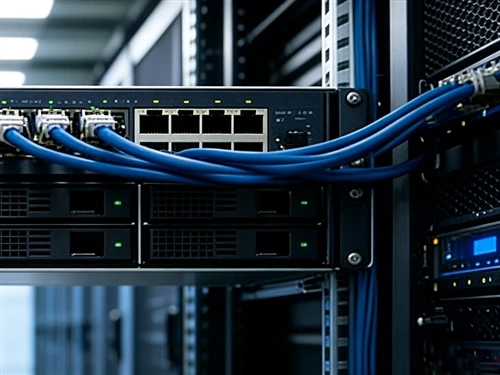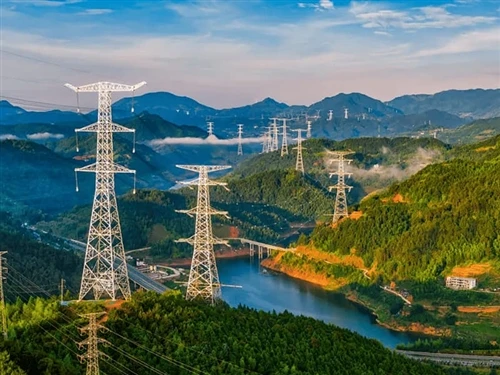
Control cables are the signal nerve of electrical systems. They are low-voltage cables specifically used to transmit control instructions, feedback signals, and interlock protection signals for industrial, power, and building equipment. Unlike power cables that transmit high-power electrical energy, control cables are mainly responsible for logical control functions such as equipment start-stop, linkage, speed adjustment, and alarm output, serving as key supporting cables for the stable operation of automated equipment.
I. Basic Definition of Control Cables
Control cables are 450/750V low-voltage multi-core insulated cables composed of multi-core insulated conductors, filler layers, optional shielding layers, and outer sheaths. Featuring multiple cores, small cross-sectional area and excellent flexibility, they are suitable for signal wiring inside control cabinets, equipment and engineering pipelines, and are not used for main power transmission circuits. To put it simply: power cables are responsible for power supply, while control cables are responsible for signal control.
II. Core Characteristics of Control Cables
Control cables are professionally designed for control system operation. Their core advantages are as follows:
- Low-voltage safety: 450/750V low voltage rating, compatible with all low-voltage control circuits for stable and safe operation.
- Multi-core integration: Complete core specifications support simultaneous transmission of multiple signals, enabling neat wiring and low failure rate.
- Excellent flexibility: Multi-strand flexible copper conductors allow easy bending and vibration resistance, ideal for wiring in narrow spaces and movable equipment parts.
- Strong anti-interference performance: Shielded types effectively isolate industrial electromagnetic interference and prevent signal distortion and equipment malfunction.
- High durability: High-quality sheath materials provide wear resistance, aging resistance and moisture resistance, suitable for most indoor industrial environments.
III. Common Classification of Control Cables
According to functional characteristics, control cables are divided into two main categories to adapt to different working conditions:
Unshielded Control Cables
With a simple structure and high cost performance, these cables apply to conventional scenarios with low electromagnetic interference, such as ordinary control cabinets, small machinery, and general building control wiring. Common models: KVV, RVV, KVVR.
Shielded Control Cables
Equipped with aluminum foil or copper wire shielding layers, these cables deliver superior anti-interference capability. They are widely used in strong electromagnetic environments such as PLC automation systems, frequency conversion equipment and precision instruments to avoid signal crosstalk. Common models: KVVP, RVSP, KYJVP.
In addition, low-smoke zero-halogen, flame-retardant and fire-resistant versions are available for special fire safety and environmental scenarios such as fire protection systems and rail transit projects.
IV. Main Application Scenarios
Control cables feature strong versatility and are widely applied in:
- Industrial Automation: PLC systems, production lines, signal linkage of frequency conversion equipment
- Power Engineering: Secondary control and protection circuits of high and low voltage distribution cabinets and transformers
- Mechanical Equipment: Start-stop control and signal feedback for machine tools, fans, water pumps and HVAC systems
- Building Electrical Systems: Building automation, fire protection, elevators and intelligent lighting control systems
- New Energy & Rail Transit: Signal wiring for charging piles, energy storage devices and rail transit facilities
- Instrumentation: Signal transmission for sensors and detection equipment
Summary
Control cables are essential supporting components for all electrical and automation systems. With stable signal transmission, flexible wiring performance and reliable anti-interference capability, they ensure precise equipment control and safe system interlocking, making them indispensable basic cables for industrial, power and intelligent building projects.